RegulationReader guide
When a gambling complaint moves to independent review
Understand the complaints process for Gambling Commission-licensed businesses, the eight-week ADR route, evidence and the limits of independent review.
First, identify the complaint you are making
A complaint about a gambling transaction needs a clear route from the business to any independent reviewer. For businesses licensed by the Gambling Commission in Great Britain, the regulator sets standards for handling complaints and providing access to alternative dispute resolution, usually shortened to ADR. This is a description of that process, not a prediction that a particular claim will succeed.
The Commission’s guidance for businesses requires accessible information about making a complaint, response times and escalation. Start by locating the complaints procedure for the business involved. A general conversation with customer support may leave the status unclear; ask for confirmation that the matter has entered the formal complaints process.
What the eight-week point means
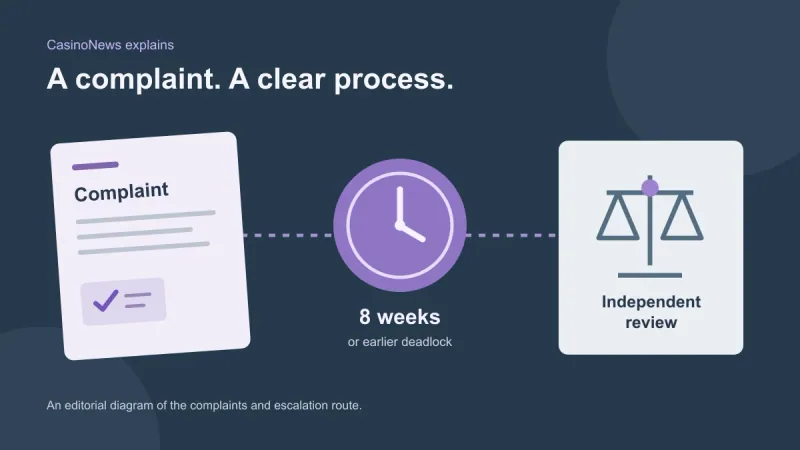
The Commission’s procedural guidance says an unresolved dispute must be capable of referral to an approved ADR provider after eight weeks, allowing for any permitted pauses in the complaints clock. Referral can happen earlier when the parties reach a deadlock or final position. The relevant starting point is receipt of the complaint, rather than the date someone first became dissatisfied.
This distinction matters when reading a timeline. Record the complaint date, subsequent responses and any explanation of a pause. A final response or deadlock letter should make the next stage clearer. Eight weeks is an escalation threshold in the process; it is not a promised deadline for an ADR decision or a guaranteed payment.
Make the evidence easy to follow
An independent reviewer needs to understand both the disputed transaction and the business’s response. A concise chronology can be more useful than a long, unstructured account. Separate what happened, what the relevant terms said and what remedy you are asking for. Keep the original records rather than relying only on a later recollection.
Useful material might include a transaction reference, dated correspondence, the final response and the version of a relevant term you relied on. These are practical examples, not a universal filing checklist. Follow the chosen provider’s instructions about documents and personal information, and avoid sending the same sensitive material to unrelated organisations.
Understand the provider’s remit
ADR is an independent service that is free for the customer. The business should identify the appropriate provider. The Commission’s requirements concern unresolved disputes about the outcome of gambling transactions; an ADR provider decides whether a submitted case falls within its scope before proceeding.
The Commission’s consumer guidance distinguishes those disputes from general customer-service complaints or a business’s refusal to accept a bet or someone’s custom. Describing a poor experience does not automatically establish a transaction claim. When several issues are involved, explain them separately so the provider can identify which questions it can consider.
Read the outcome and next steps carefully
An ADR decision should be read alongside the provider’s own procedure. The Commission says a provider should explain any available appeal process, including grounds and time limits. A disagreement with the outcome is not, by itself, evidence that every route of appeal is available.
Keep the decision and its supporting correspondence. If considering court proceedings, the Commission advises obtaining independent legal advice. This article offers general information about the published framework in Great Britain; it does not assess an individual dispute or replace advice on that dispute.
Sources & reading
The documents behind this explanation. Historical sources describe their own period.
Publication byline. Prepared with AI assistance; see our editorial standards.