
RegulationHistorical explainer
Macao’s January 2022 casino bill: what the Executive Council proposed
The draft sent for legislative consideration followed public consultation and proposed changes to concession limits, duration and oversight.
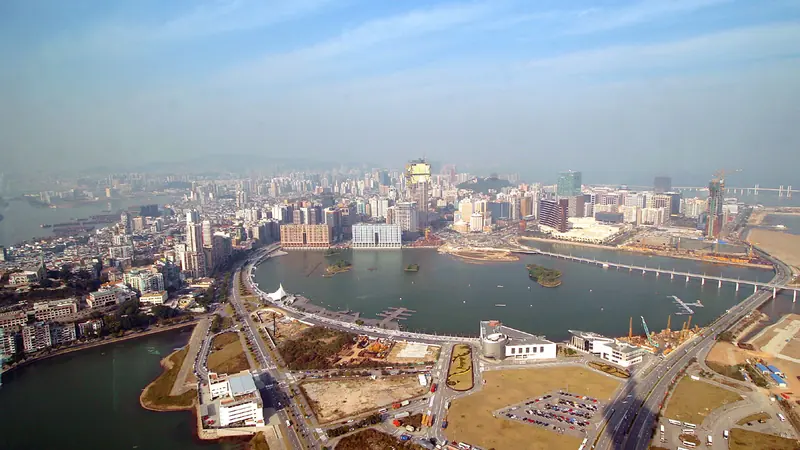
Illustrative photo: nam van lake area of the macao peninsula seen from above. Not a photo of the reported event.
Photo: Kabacchi, CC BY 2.0 (https://creativecommons.org/licenses/by/2.0), via Wikimedia Commons (https://commons.wikimedia.org/wiki/File:Nam_Van_Lake_-_Macau.jpg) Cropped and resized for this page. Source file Image credits
- On 14 January 2022, Macao’s Executive Council announced that it had completed discussion of a bill amending Law 16/2001 and would send the bill to the Legislative Assembly.
- The notice proposed a maximum of six concessions, a ban on subconcessions, and concession terms of no more than ten years, with a possible exceptional extension of up to three years.
- The proposal touched several different dimensions of the concession system: how many permissions could exist, how long they could run, who could hold them and what duties accompanied them.
From consultation to a legislative proposal
On 14 January 2022, Macao’s Executive Council announced that it had completed discussion of a bill amending Law 16/2001 and would send the bill to the Legislative Assembly. The government notice linked the proposal to a public consultation held from 15 September to 29 October 2021 and a consultation summary published on 23 December.
This sequence distinguishes the consultation stage from legislative consideration. The Council’s announcement described a draft. Its publication was not, by itself, the passage of every proposed provision into law.
What the draft contained
The notice proposed a maximum of six concessions, a ban on subconcessions, and concession terms of no more than ten years, with a possible exceptional extension of up to three years. It also described stronger suitability review, higher capital requirements and social-responsibility obligations.
These points are an English summary of the official Chinese-language notice. They describe the January proposal, not a complete statement of current Macao law. For a legal conclusion, the enacted text, later amendments and commencement rules must be checked separately.
Why this was more than a change of licence length
The proposal touched several different dimensions of the concession system: how many permissions could exist, how long they could run, who could hold them and what duties accompanied them. A short headline focused on the number of concessions would miss the governance dimension.
The historical importance is the move from consultation into a defined legislative proposal. A careful timeline should record that milestone separately from subsequent enactment, tender preparation and contract awards. Those later actions require their own dated records.
Common questions
What happened (14 January 2022)?
On 14 January 2022, Macao’s Executive Council announced that it had completed discussion of a bill amending Law 16/2001 and would send the bill to the Legislative Assembly. The government notice linked the proposal to a public consultation held from 15 September to 29 October 2021 and a consultation summary published on 23 December.
Why does the exact wording matter?
The notice proposed a maximum of six concessions, a ban on subconcessions, and concession terms of no more than ten years, with a possible exceptional extension of up to three years. It also described stronger suitability review, higher capital requirements and social-responsibility obligations.
What does this page not conclude?
The proposal touched several different dimensions of the concession system: how many permissions could exist, how long they could run, who could hold them and what duties accompanied them. A short headline focused on the number of concessions would miss the governance dimension.
Sources & reading
The documents behind this explanation. Historical sources describe their own period.
Publication byline. Prepared with AI assistance; see our editorial standards.


